In an era defined by digital saturation and shortened attention spans, sales organizations face a growing challenge: how to maintain clarity, momentum, and internal alignment throughout complex buying processes. While digital tools dominate many early-stage interactions, print collateral has re-emerged as a critical mechanism for supporting these goals — not because it replaces digital, but because it enhances comprehension, retention, and trust in ways screen-based communication cannot.
Neuro-marketing studies consistently show that tactile, printed materials generate deeper cognitive engagement and longer-lasting recall than purely digital content. When prospects physically handle a document, they invest more focused time processing the information. In the context of sales enablement, that extended attention often becomes a determining factor in how effectively a message is understood, remembered, and shared internally.
Print collateral, therefore, functions as a strategic anchor — a way to preserve message fidelity and ensure that the value story remains accurate and consistent as it travels across the buying group.
The Tactile Advantage: Why Print Supports Better Buyer Understanding
Printed materials bring a level of permanence, clarity, and sensory engagement that digital media struggles to match. Unlike an email or a browser tab that competes with dozens of other open windows, a printed piece commands a different level of mental processing. Tactile interaction activates spatial memory and increases the likelihood that key information will be recalled later.
For sales teams navigating multi-stakeholder environments, this is particularly valuable. Clear, concise printed collateral ensures that every stakeholder — whether they were present in the initial meeting or not — receives the same message, the same framing, and the same rationale for the proposed solution.
High-Impact Print Leave-Behinds: Supporting Internal Advocacy
Modern buying groups are often large, distributed, and highly collaborative. A champion inside the organization frequently bears the responsibility of explaining a vendor’s value to a broader committee. Print leave-behinds exist to support that effort.
Strong leave-behinds typically include:
- A succinct articulation of the core benefits
- Proof points that reduce uncertainty
- Clear framing of what matters most in the decision
- Language designed for easy internal retelling
A well-executed one-sheet becomes a portable version of the sales conversation — a high-fidelity reference that preserves accuracy and reduces the risk of misinterpretation. For more complex offerings, short role-based FAQs or abbreviated case summaries help different stakeholders understand relevance from their own vantage point.
This approach, supported by research from HighSpot, aligns with current sales enablement research emphasizing the importance of equipping buyers, not just sellers, with tools that accelerate comprehension.
Comparison Guides: Reducing Cognitive Load and Supporting Decision Clarity
Choice complexity often slows down decisions. A comparison guide counteracts this by presenting options side-by-side with clear distinctions tied to specific use cases or buyer needs.
The most effective guides:
- Limit the number of options
- Use simple, outcome-oriented language
- Highlight the differentiators that matter most
- Reinforce clarity rather than expand complexity
A visual table format organizes information efficiently and reduces the burden on buyers to “translate” features into meaningful differences. When paired with a digital extension — such as a QR code linking to a pricing matrix or ROI model — the guide becomes a bridge between tactile and digital exploration.
Role-Based One-Sheets: Aligning Messaging to Stakeholder Priorities
Different stakeholders care about different dimensions of value. Role-based one-sheets translate the broader offering into the specific benefits each audience cares about most.
Typical stakeholder priorities include:
- Budget owners: Financial justification, cost containment, predictability
- End users: Practical workflow improvements, ease of use, time savings
- Executives: Strategic alignment, long-term impact, risk mitigation
Each one-sheet should present:
- A focused benefit list
- Two strong, credible proof points
- A brief explanation aligned to that role’s priorities
This structure simplifies internal communication and helps champions advocate effectively on your behalf.
Sample Kits: Establishing Tangible Understanding
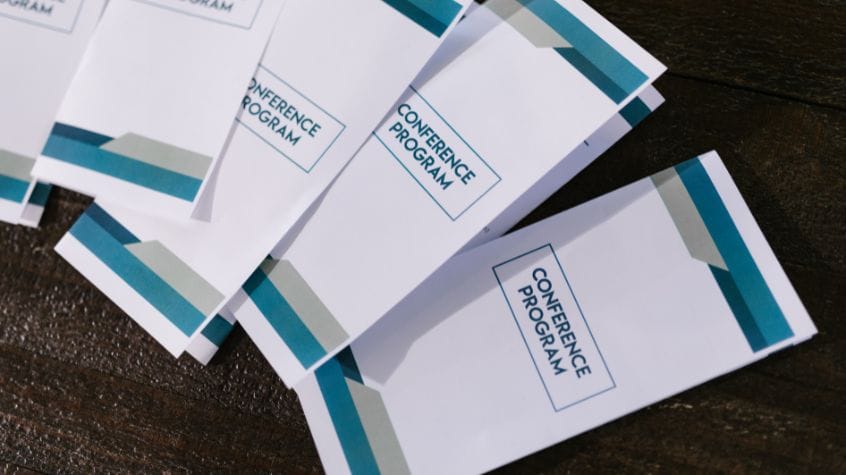
When evaluating either physical products or abstract services, tangible evidence reduces uncertainty — especially in environments where integrated marketing efforts need tactile proof to support digital messaging. Sample kits play an important role in establishing expectations, demonstrating quality, and removing ambiguity.
An effective kit may include:
- Before-and-after examples
- A condensed case narrative
- Visual proof of outcomes
- Compact explanations of how those outcomes were achieved
Samples create a tactile baseline for comparison and allow stakeholders to validate claims independently.
The Structured Sales Meeting Kit: Bringing Order to Complex Discussions
High-performing business development teams often rely on a standardized set of meeting materials designed to guide conversations while keeping discussions focused and organized.
A typical meeting kit includes:
- Role-based one-sheets
- A comparison guide
- A pricing or package overview
- A concise case study
- A leave-behind summarizing the essential next steps
Consistency in design, structure, and production quality contributes to a professional experience and helps establish cognitive order during discussions. The materials act as a framework that shapes how information is absorbed and recalled.
Targeted Direct Mail: Restoring Attention at Critical Moments
As buyers progress through later stages of evaluation, attention can wane, and communication channels may become saturated. Targeted direct mail offers a way to reintroduce focus during these moments.
Because printed pieces:
- Stay visible longer
- Are opened more reliably
- Are less likely to be lost in digital clutter
…they create opportunities for renewed engagement. When integrated with scannable digital pathways such as QR codes or personalized URLs, direct mail supports both analog and digital modes of exploration without forcing buyers into a single channel.
Collateral Management: Ensuring Message Consistency Across the Organization
Sales enablement extends beyond creating effective materials — it also requires maintaining them. Discrepancies in version control, outdated documents, and inconsistent messaging introduce friction and confusion inside the buying group.
A version-controlled repository of approved collateral ensures that:
- Stakeholders receive accurate, consistent information
- Reps spend less time searching and more time engaging
- Updates propagate uniformly
- Branding and claims remain aligned across all materials
Centralized inventory management and predictable print cycles further ensure that materials remain current, accurate, and available when needed.
Brand Consistency as a Unifying Force in Multi-Stakeholder Decisions
In complex deals, multiple individuals evaluate your solution independently. When every printed piece follows consistent design, tone, and structure, it reinforces a coherent brand presence throughout the evaluation process.
This coherence:
- Reduces internal friction
- Supports the champion’s advocacy role
- Helps stakeholders align around a shared understanding
Consistency functions as a cognitive shortcut — signaling organization, stability, and reliability.
Print’s Enduring Value in Hybrid and Virtual Selling Environments
As hybrid and remote interactions have become more common, print collateral remains an important tool for establishing shared context, particularly when helping salespeople close deals in hybrid or virtual environments.
For example:
- Pre-meeting packets help frame discussions before the conversation starts.
- Printed agendas and one-sheets guide attention during virtual meetings.
- Printed follow-up summaries reinforce key messages after the call.
These materials give participants common reference points regardless of location or communication channel, strengthening comprehension and recall.
Developing a Conversion-Focused Print Toolkit Through Strategic Marketing Collateral Printing
The most effective print collateral systems emerge from studying real sales conversations. By analyzing the questions that arise, the objections that surface, and the moments where decisions slow, organizations can design materials that address those friction points directly.
A strong toolkit:
- Reflects the structure of actual buyer conversations
- Uses clear, purpose-driven formats
- Balances tactile and digital engagement
- Evolves based on feedback and measurement
- Supports the buyer’s internal communication needs
Over time, these materials form a coherent, strategic system that supports comprehension, builds trust, and accelerates decision-making. Organizations often partner with print procurement companies or rely on internal teams supported by our robust print marketing capabilities to keep this ecosystem aligned and scalable.