A luxury customer’s journey often starts on a screen: a campaign image, a runway clip, a carefully composed product page. But the moment that tends to stay with people usually comes later, when they first hold something. The invitation with real weight to it. The box that opens in a deliberate sequence. The card in the boutique that explains how a piece was made. Digital channels introduce a collection. The physical luxury brand experience is often what makes it feel real. For luxury houses, boutiques, and fashion brands, that makes printed and physical materials, and the care with which they come together, central to every launch, event, and in-store visit.
Why Does the Physical Experience Carry So Much Weight in Luxury Brand Experiences?
The effect of touch is more than a matter of taste. Researchers have studied it for years, and the findings are consistent.
- Weight signals importance. In a study published in Science, people who reviewed a resume on a heavy clipboard judged the candidate as more serious than people who reviewed the same resume on a light one. The researchers found that weight, texture, and hardness can all shape judgments without people realizing it.
- Touch builds a sense of ownership. Research in the Journal of Consumer Research found that simply touching an object increases how much people feel it is theirs, and that this usually raises what they are willing to pay, as long as the object is pleasant to handle.
- Physical material is processed more emotionally. A brain-imaging study commissioned by Royal Mail with Millward Brown and Bangor University showed the same material on screen and on printed cards, and the physical version prompted much deeper emotional processing.
- Physical pieces are remembered and valued more. Work by the U.S. Postal Service Office of Inspector General and Temple University found that physical ads created stronger memories, sparked more desire, and raised the perceived value of the products, while digital ads won attention more quickly.
How Can Print Connect Online Shoppers With an In-Store Experience?
Print connects online shoppers with physical retail experiences by transforming digital interest into personalized invitations, appointments, events, and boutique visits.
Luxury direct mail can be particularly effective when communications reflect a customer’s demonstrated interests or existing relationship with your brand.
Consider these examples:
- Personalized boutique invitations: Customers who have expressed interest in a collection receive an invitation to explore it during a private appointment.
- Premium event invitations: Digital campaigns announcing a collection launch are complemented by beautifully printed invitations to an exclusive preview or trunk show.
- Luxury lookbooks: Customers receive curated product imagery accompanied by an invitation to schedule a personal styling consultation.
- Appointment and clienteling cards: Printed reminders provide a thoughtful, personal connection between online appointment booking and the boutique visit.
For luxury brands, the takeaway is simple. Digital is very good at being noticed. Physical materials are better at being remembered, felt, and valued. Craftsmanship, exclusivity, and attention to detail are qualities people believe more readily when they can hold the evidence.
Which Tactile Details Communicate Quality Before a Word Is Read?
Before anyone reads a line of copy, the material has already made an impression. The details that matter most include:
- Paper weight and texture: substantial stocks, soft-touch or cotton papers, and deckled edges
- Finishes: engraving, foil stamping, embossing and debossing, and edge gilding
- Color accuracy: brand colors that match the website, the boutique, and the product itself
- Construction: rigid boxes, magnetic closures, ribbons, and inserts that guide the order in which things are revealed
- Handwriting and personalization: a name, a signature, or a note that reads as individually written
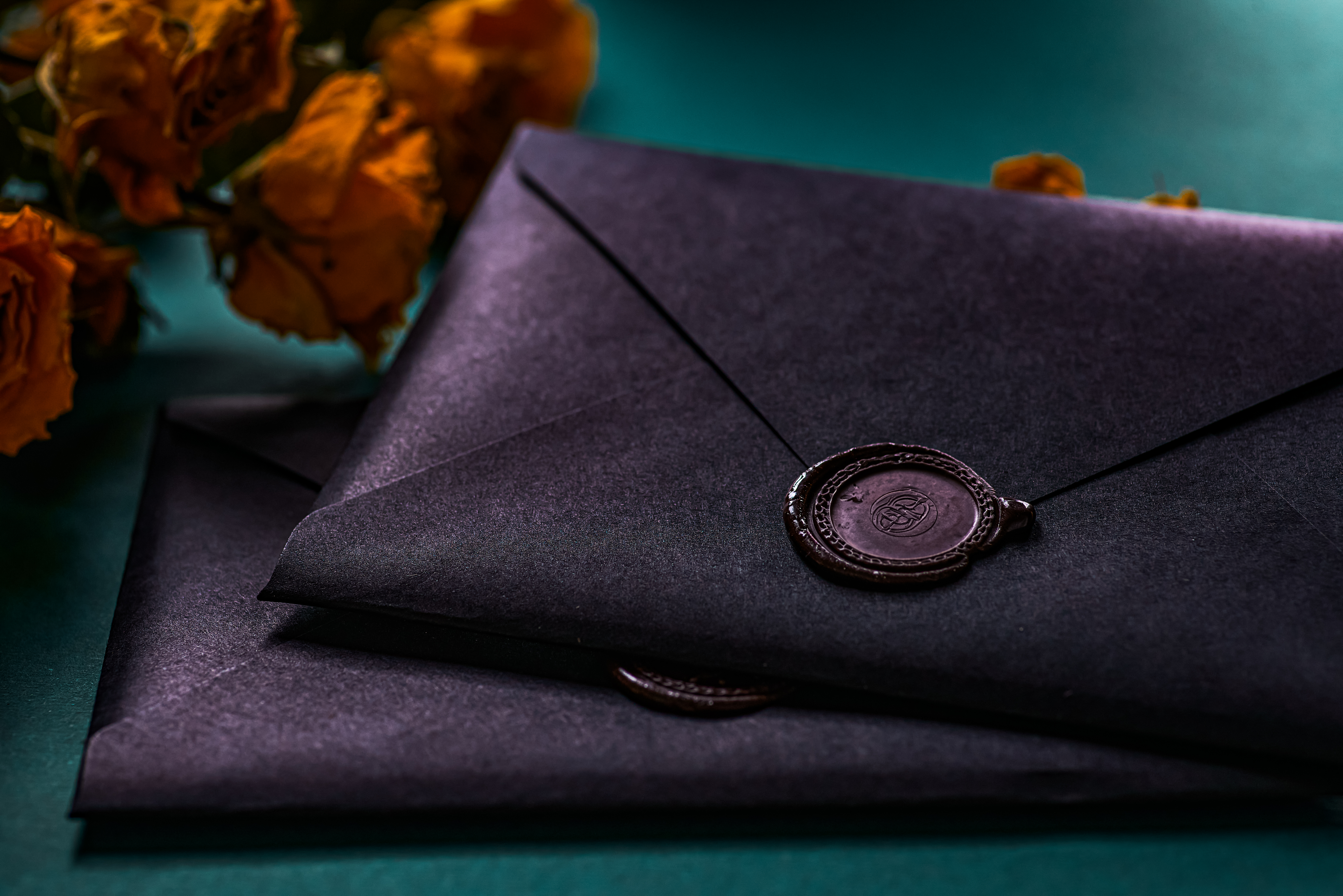
More is not always better. As we note on our page for luxury brands, boutiques, and Maisons, restraint is often more luxurious than the most expensive treatment. A heavy envelope, an engraved card, and a perfectly finished box can say more than an elaborate reveal. The right materials sound like the brand: a playful label may lean into spectacle, while a heritage house may say everything with paper weight and a single well-chosen detail.
How Do Invitations and Launch Kits Turn Anticipation Into Participation?
Fashion learned long ago that the invitation is part of the show. Glossy has noted that show invitations have become collectibles for industry insiders. Prada once invited menswear guests with a white cotton pajama set in a gift box, with the show details printed on the chest. Dries Van Noten sent a clear square box filled with moss, with the show information engraved on the outside. Akris produced a sculptural invitation and press pack that echoed the walls models walked out of on the runway.
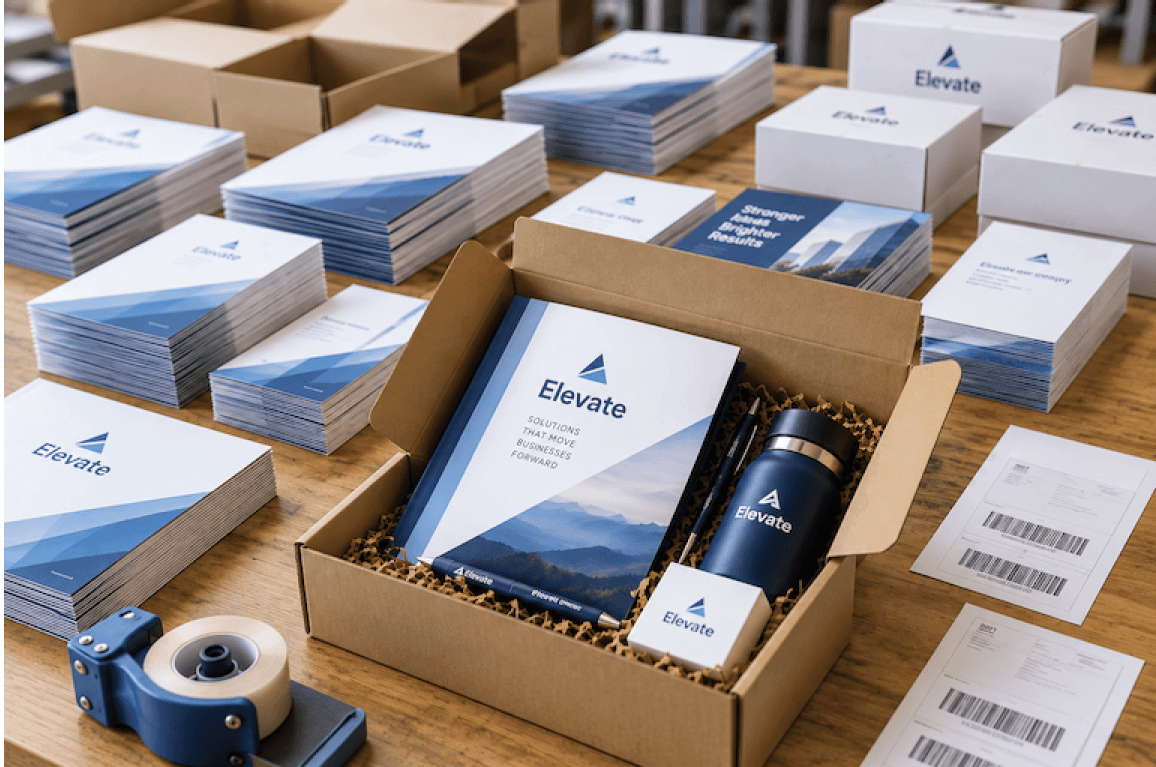
Each of these is a kitting project: separate printed and physical pieces brought together into one package for a specific person, timed to a specific moment. Kitting is what makes sure the tactile story arrives whole: the right components, in the right order, with nothing missing and nothing out of place.
Launch kits follow the same logic. Rhode redesigns its gifting package around each launch rather than dropping a new product into the same box. For its Pocket Blush launch, everything was themed in the launch’s yellow, down to the tote, pouch, and water bottle. In luxury beauty, creators unboxing a Givenchy Beauty PR package have pointed out the craftsmanship of the kit itself, with the packaging conveying heritage before the product was even visible. An influencer kit for skincare house Strange Luxury hid a branded applicator in a concealed drawer, turning the opening into a small ritual.
The guest is also no longer the only audience. When an editor opens the box, a stylist photographs it, and a creator posts it, the physical experience becomes part of the launch’s public story. That only works if the materials hold up to close inspection.
How Does the Same Story Continue Inside the Boutique?
A customer who discovered a collection online arrives with expectations. The boutique should feel like the next chapter, not a different book.
Print often makes that connection first. A personalized invitation to a private appointment, a lookbook mailed to a client who showed interest in a collection, or an appointment card confirming an online booking all turn digital interest into a visit. Once the client is inside, the materials they see and handle carry the story forward:
- Window graphics and storefront signage that extend the season’s campaign onto the street
- Product storytelling cards that explain materials, craftsmanship, or heritage
- Restrained point-of-purchase displays that highlight a collection without competing with it
- Packaging, tissue, and closures that make the purchase feel considered
- Personalized thank-you notes that continue the relationship after the visit
Consistency is what makes this feel seamless. Colors should match what the customer saw online. Typography, photography, and tone of voice should carry over. Paper and finishes should reflect the brand’s character. Where a digital link adds something genuinely useful, such as a QR code on a product card leading to a craftsmanship film, it can connect the physical and digital sides of the experience. The goal is not to add technology to every piece. It is to make each touchpoint feel like the same brand.
What Makes Events, Trunk Shows, and Openings Memorable?
Events are where the physical experience is most concentrated, and where coordination matters most.
When Zadok Jewelers opened its Austin boutique, the eve-of-opening VIP event was limited to 20 guests, followed by a grand opening for 400. Anticipation began with hand-delivered invitations tucked into a miniature piece of luggage, along with logo cookies and a small spa kit, all tied to the evening’s retro travel theme. At a much larger scale, Christian Louboutin brought more than 100 top clients to Paris for a four-day trunk show during fashion week, an event planned over roughly four months across regions. And trunk shows can still drive meaningful results: Glossy reported that one day-long trunk show by contemporary label Toccin with a wholesale partner generated more than $100,000 in sales.
The most memorable events treat the physical materials as one continuous experience across three moments:
- Before: the invitation, RSVP card, and any teaser that sets expectations
- During: programs, menus, place cards, product cards, and a keepsake to take home
- After: personalized notes and follow-up materials that keep the relationship going
What Has to Go Right Behind the Scenes?
The more personal and tactile the experience, the less room there is for error. A misprinted name, a mismatched color, or a kit that arrives after the event undoes the impression it was meant to create.
Fashion Week Online describes the issues fashion teams commonly face. Editors, stylists, and creators may each receive a different kit. Kits must land before an embargo lifts, while recipients may be traveling between New York, London, Milan, and Paris. Apparel brings sizing problems beauty brands rarely face, so sizes and addresses need confirming in advance.
Multi-boutique brands and multi-brand groups add another layer. Each location may need its own mix of invitations, signage, and collateral, all held to the same standards. Web-to-print portals let individual boutiques order approved materials without drifting from brand guidelines, and centralized fulfillment helps coordinate storage, kit assembly, and delivery. Questions worth answering early include:
- Does every recipient or location receive the same materials, or are there tiers?
- Which pieces are personalized, and where does that information come from?
- Which components are arriving from other partners, such as product or fragrance samples?
- Will everything be released at once, or in waves around a calendar?
How Can Brands Tell Whether the Physical Experience Worked?
Measurement has improved. Launchmetrics developed its Media Impact Value metric with the Council of Fashion Designers of America, letting brands compare an editorial, an influencer post, and a celebrity appearance on one scale.
But for luxury brands, the most telling measures are often qualitative. Did the right clients attend? Did they book appointments? Did the coverage describe the collection the way the brand intended? A Launchmetrics executive made a similar point to System magazine: strong numbers can still signal a problem if the story being told doesn’t match the brand’s intent.
How Can a Launch, Boutique, or Event Feel Like One Experience?
The most successful luxury programs share a planning habit. They start with the person and the moment, then work backward. What should the editor feel when the box opens? What should the client hold when they walk into the trunk show? What should each boutique have on hand the morning it opens?
When those answers come first, decisions about paper, finishes, personalization, assembly, and delivery follow naturally, and the customer encounters one continuous brand story instead of a series of separate pieces.
At PDC Graphics, our luxury brand printing and integrated marketing work centers on exactly that kind of continuity. If you’re thinking through how the physical side of an upcoming launch, event, or boutique program should come together, we’re always glad to have that conversation.